

What Top Software Development Companies Are Getting Right in 2026: Insights from Clutch Top 15 Rankings
Keyhole Software was recognized across multiple Clutch categories in 2026 as a top software development company. This post breaks down the patterns behind those rankings and what they mean for organizations evaluating enterprise software development partners.
—
Rankings alone don’t define a software development company’s value, but they do reveal meaningful patterns: client trust, delivery consistency, and the ability to solve complex technology challenges in real-world environments.
In 2026, Keyhole Software earned Top 15 recognition across multiple Clutch categories, including software development, application modernization, and staff augmentation. That recognition reflects repeatable outcomes across enterprise modernization engagements, not just market visibility. For example, in a recent insurance modernization, Keyhole used an architecture-first, AI-accelerated approach to stabilize production, accelerate delivery cadence, and create a repeatable pathway for future releases (case study).
For organizations evaluating enterprise software partners, that context matters: Clutch’s evaluation factors include client feedback, delivery consistency, and market presence, all of which align closely with what buyers now prioritize:
- senior technical judgment,
- architecture-led delivery,
- pragmatic modernization experience, and
- disciplined, human-reviewed use of AI within structured delivery workflows.
Looking across this year’s top firms, a few clear patterns emerge that buyers should validate before selecting a partner.
What You’ll Learn In This Post
- What Clutch rankings reveal about the firms enterprise buyers should trust.
- Why architecture-led delivery matters more than tools or frameworks.
- How modernization, senior delivery teams, and disciplined AI use shape better outcomes.
- What to look for when evaluating a software development partner in 2026.
1. Architecture Matters More Than Tools in Modern Software Development
Technology stacks change. Architecture is what determines whether a system holds up over time.
The most successful projects are not defined by whether a team used Java, .NET, or the latest framework. They are defined by whether the system was designed to evolve. That means dependencies are manageable, integrations are intentional, and the system can scale without constant rework.
In a recent insurance modernization, Keyhole took an incremental, architecture-first approach. The team replaced services one at a time and established clear interface definitions so the platform could evolve without going offline. This created a repeatable modernization pathway, stabilized production, and improved delivery cadence (see AI-Accelerated COBOL to Spring Batch Modernization case study).
In modernization efforts, the hardest decisions are rarely about writing new code. They are about deciding what to preserve, what to replace, and how to sequence changes without disrupting the business. Organizations are placing increasing value on partners who can guide those decisions with clear architectural artifacts and incremental plans rather than one-time rewrites.
How Buyers Should Validate Architecture
- Ask how architecture decisions are documented and how the team plans sequencing and rollback to avoid disruption.
- Ask for a concrete example from a similar project and how the team maintained production stability during phased modernization.
- Confirm how interfaces, data models, and APIs were defined and consistently governed across the system.
Architecture sets the foundation. Delivery success depends on how well those decisions are made and executed over time. The next factor is who is making them.
2. Seniority and Consistency Drive Outcomes
This is one of the clearest differentiators among software development companies working in enterprise environments.
Larger teams do not automatically lead to better results; they often introduce coordination overhead and inconsistent decision-making. What tends to work better in enterprise modernization is smaller, senior teams that can move quickly, make informed trade-offs, and remain consistent throughout an engagement.
Keyhole frequently embeds small, named delivery pods with client teams to minimize onboarding friction and reduce the need for later architectural corrections, which is a pattern visible in multiple projects on the Keyhole site.
You see this reflected in delivery outcomes:
- Faster ramp-up with less onboarding friction.
- Fewer architectural corrections later in the project.
- More predictable timelines and fewer surprises.
You also see it in client behavior: organizations that find the right partner tend to engage for follow-on work, turning single projects into long-term relationships, which is a stronger signal of delivery quality than any one milestone.
How Buyers Should Validate Team Seniority and Consistency
- Ask who will actually be assigned to your project and request brief bios, including their experience on similar modernization efforts.
- Ask how the team is structured and onboarded, including who the day-to-day leads are and how knowledge is shared across the team.
- Ask for an example from a similar project that shows how the same senior engineers stayed involved from discovery through delivery.
The strongest signal of delivery quality is repeat work, and nearly 78% of our engagements last year came from clients who chose to work with Keyhole again.
Keyhole consultants average over 17 years of experience, which allows teams to move quickly without sacrificing decision quality.
3. Modernization Is the Core Use Case
Greenfield development still happens, but most enterprise effort today is focused on modernization. Organizations are migrating off legacy platforms, breaking down monolithic systems, and moving toward cloud-native architectures where it makes sense.
Most teams are not starting from scratch. They are working within systems that have been built up over years and now present real constraints:
- Applications that are difficult to maintain or extend.
- Platforms that limit integration with newer tools.
- Infrastructure that slows down delivery cycles.
As a result, modernization has become the center of most software initiatives. The best software development companies approach modernization as a long-term evolution, not a one-time rewrite.
This work is not about rewriting everything. It is about making deliberate decisions on what to preserve, how to sequence changes, and how to keep the business running while those changes are made.
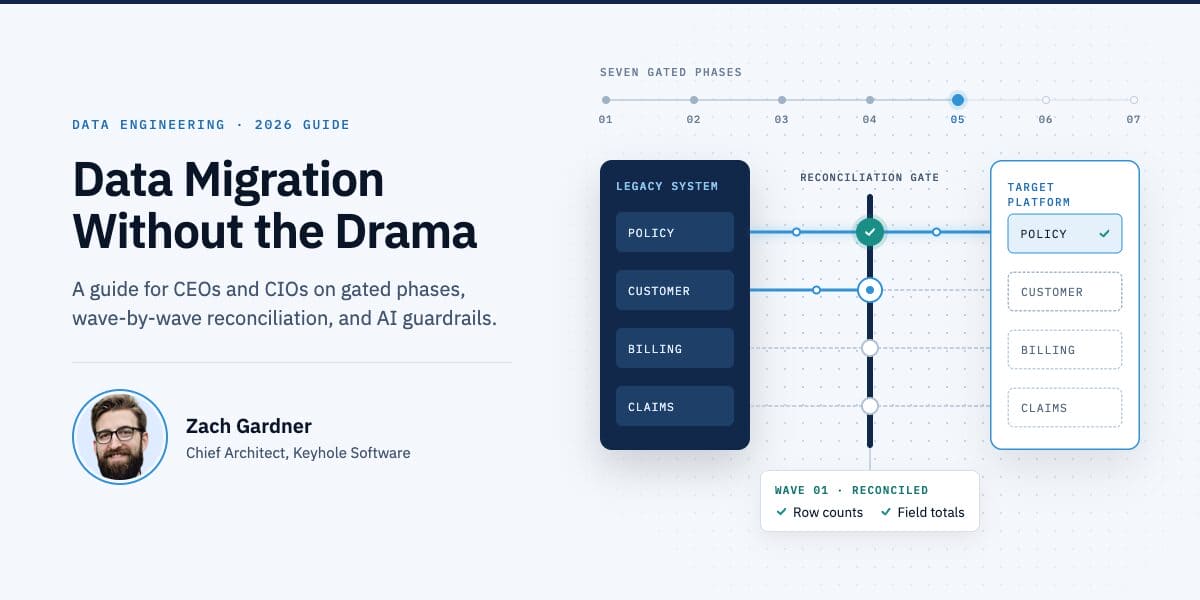
Keyhole’s approach to application modernization services is pragmatic. We focus on incremental replacement rather than full rip-and-replace efforts, validating patterns early to reduce downstream rework.
In a retail delivery modernization, the team built an iterative front-end proof of concept to validate UX and integration patterns before full rollout. That early validation accelerated stakeholder alignment and reduced scope creep (see Retail Delivery Modernization case study).
In a separate COBOL modernization, incremental refactoring combined with AI-assisted analysis allowed the team to accelerate the modernization core processing while maintaining production stability throughout the transition (see AI-Accelerated COBOL to Spring Batch Modernization).
How Buyers Should Validate Modernization Experience
- Ask for a concrete example from a similar modernization project, including how legacy systems were incrementally replaced without disrupting operations.
- Ask how the team decides what to preserve versus replace, and how those decisions are validated early in the process.
- Ask how success is measured during modernization, including how stability, delivery speed, and business continuity are maintained throughout.
The firms being recognized today are the ones that can navigate this complexity without disrupting the business. Increasingly, AI is playing a role in how that work gets done.
Modernization is not defined by how quickly something new is built. It is defined by how effectively existing systems are improved while remaining stable, usable, and aligned with business needs.
4. AI Is Changing Execution, Not Replacing Engineering
AI is reshaping how software gets built, but its impact is practical. AI in software development accelerates targeted parts of the delivery process rather than replacing engineering judgment.
The biggest gains come from speeding up repetitive, analysis-heavy work. This includes understanding legacy codebases, generating documentation, creating tests, and supporting incremental modernization. The key is that senior engineers remain responsible for architecture decisions and final validation.
When applied correctly, AI improves speed and reduces manual effort. Without structure, it introduces risk just as quickly. Leading software development companies are applying AI to accelerate delivery while maintaining engineering discipline.
In a recent COBOL modernization, Keyhole used AI-assisted code analysis and automated test generation to accelerate refactoring and validation. Those outputs were integrated into CI pipelines and reviewed by engineers, allowing the team to focus on architectural decisions and edge cases rather than repetitive validation work (see AI-Accelerated COBOL to Spring Batch Modernization).
In practice, this only works when AI is applied to the software development process within a clear and disciplined approach.
How Keyhole Applies AI in Practice
At Keyhole, AI is used to support the parts of development that are time-consuming but repeatable, not to replace engineering judgment.
We use AI to help analyze code, suggest refactors, and generate documentation and tests. Those outputs are always reviewed by engineers and aligned with the broader architecture so they fit within the system as a whole.
For example, automated test generation is integrated into CI pipelines to speed up validation, but every test is reviewed and refined before it becomes part of the codebase. Documentation is also generated and maintained alongside the system so design decisions remain clear and accessible over time.
A Disciplined AI Operating Model
What makes this effective is not the tools themselves, but how they are used. AI is applied within defined workflows so outputs are consistent and repeatable. Nothing is accepted without validation. Every AI-generated artifact is reviewed, tested, and aligned with the system’s architecture before it is merged.
Engineers remain responsible for the decisions that matter most. AI helps accelerate the work, but experienced developers ensure the system is designed correctly and built to last.
How Buyers Should Validate AI Use
- Ask for a concrete example from a similar project where AI was used, including what was generated and how it was validated.
- Ask how AI-generated outputs are reviewed, tested, and integrated into the delivery process.
- Ask how senior engineers stay involved in reviewing outputs and making final architectural decisions.
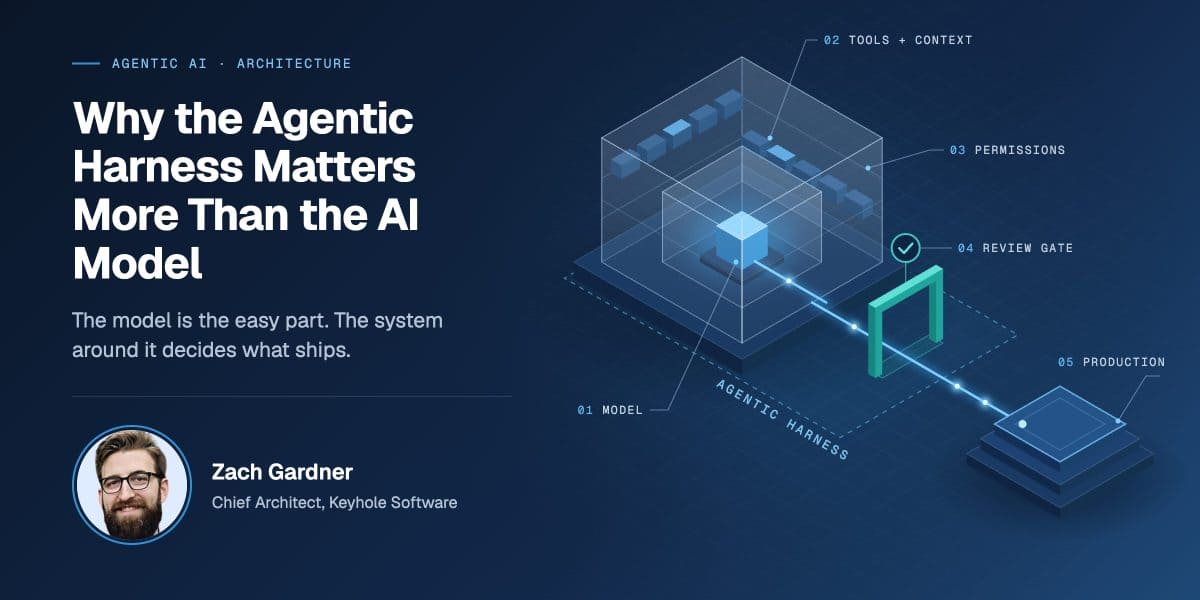
We treat AI as an execution layer. It speeds repeatable work, while experienced engineers guide architecture and validate the decisions that matter most.
That disciplined approach becomes even more important when changes need to be integrated into real systems.
5. Integration Into Real Systems Is the Differentiator
Building something new in isolation is relatively straightforward. The real challenge is integrating it into an existing enterprise environment where APIs, data platforms, operational workflows, and regulatory controls already exist.
The firms that consistently deliver value are able to:
- Work within existing systems and constraints.
- Integrate with APIs, data platforms, and operational workflows.
- Maintain stability while making incremental changes.
This is especially critical in industries where systems are tightly connected to day-to-day operations, including transportation, healthcare, manufacturing, and financial services. In these environments, success is not measured by launching something new. It is measured by improving what already exists while maintaining stability and continuity.
For example, in a healthcare data platform modernization, Keyhole focused on improving integration points and streaming data flows to support better data freshness while preserving operational continuity (see Healthcare Data Platform Modernization & Streaming Integration).
How Buyers Should Validate Integration Capability
- Ask for a real example from a similar project that shows how systems were integrated, including how stability was maintained during the transition.
- Ask to see an integration diagram and how the team tested and validated those integrations before and after cutover.
- Ask how operational or regulatory controls were preserved and how rollback and incident management were handled if issues occurred.
The differentiator is not launching something new in isolation. It is integrating change into existing systems without disrupting the business.
Final Thought
Recognition is a signal, not a conclusion, and Clutch rankings matter most when they reflect client trust, delivery consistency, and real-world outcomes.
The software development companies that continue to stand out combine technical depth with practical delivery experience. They make sound architectural decisions, apply modern tools with discipline, and focus on improving real systems without introducing unnecessary risk.
That is what drives successful outcomes and long-term partnerships.
Curious how this applies to your environment? We offer a 90-minute Architecture Health Review to map risks and outline a practical 90-day modernization plan.
More From Keyhole Software
About Keyhole Software
Expert team of software developer consultants solving complex software challenges for U.S. clients.
Share This Post
Join The Thousands Of Devs Who Subscribe
Discuss This Article
Subscribe
Login
0 Comments
Oldest