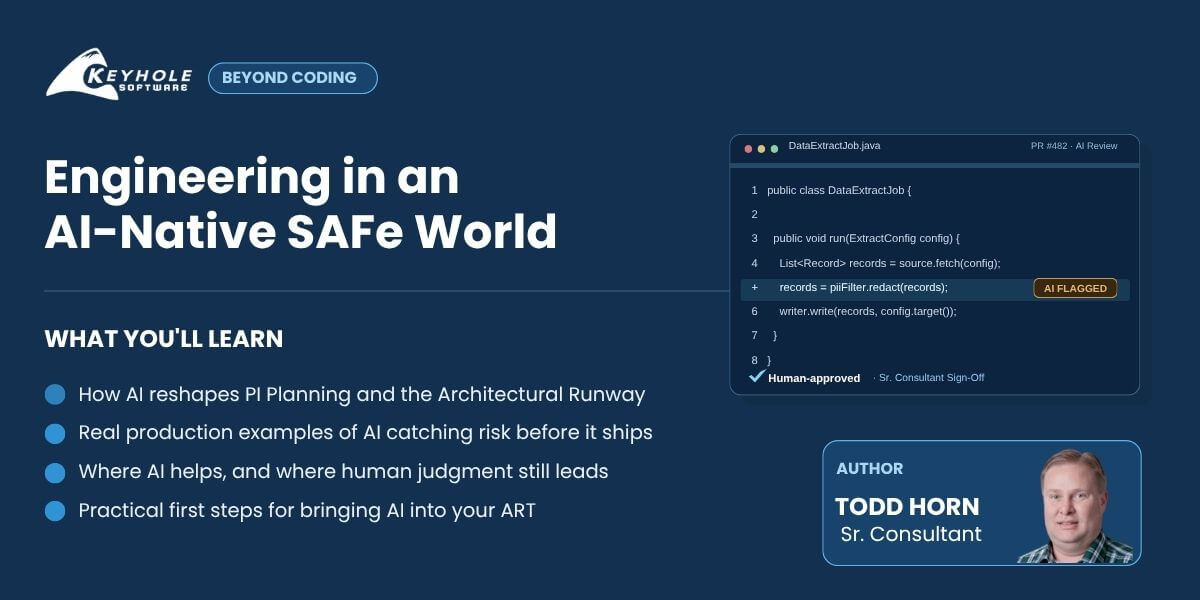
Artificial Intelligence is changing where engineering value is created: less in producing artifacts by hand, and more in making better technical decisions. In SAFe, that change extends well beyond code generation. It affects how Agile Release Trains prepare for PI Planning, how architects manage the Architectural Runway, how teams validate quality, and how organizations learn from delivery data.
In my earlier three-part series on the Foundations of SAFe, I covered its values, core principles, benefits, drawbacks, and practical application. As SAFe evolves, the next question is how AI will change the way those principles are practiced in real engineering organizations.
This article looks at what AI practices mean for engineering work inside SAFe. Rather than just faster coding, the real gains are in better planning, stronger architecture, faster feedback, and more accountable engineering decisions across the Scaled Agile Framework.