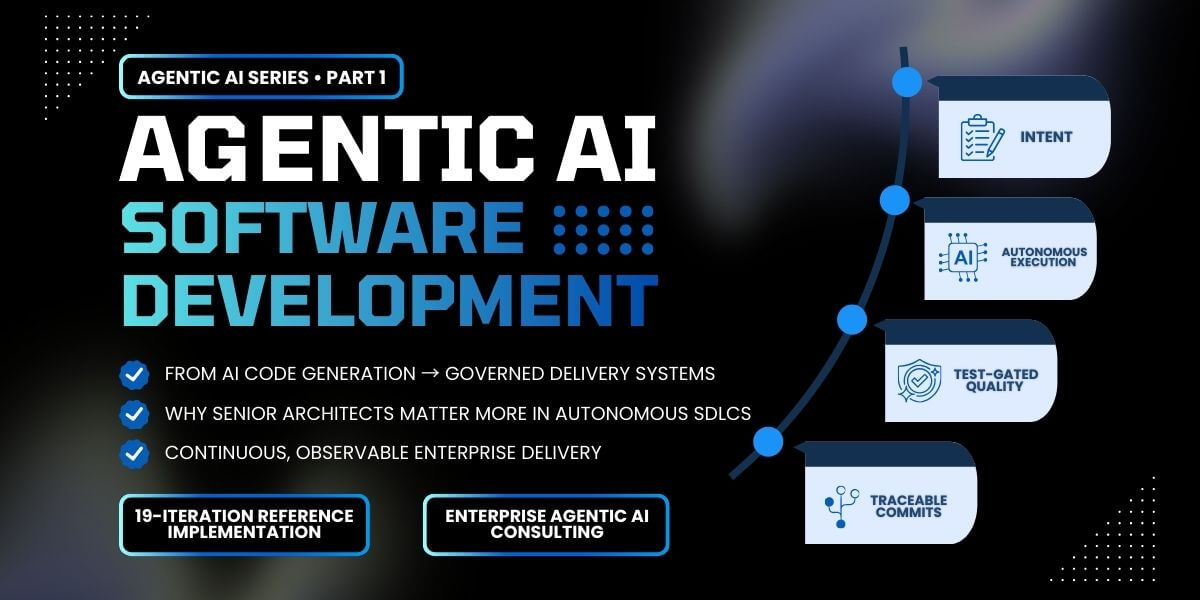
See how Keyhole implemented agentic AI development using an autonomous delivery loop to build a full-stack application in 19 test-gated iterations. This real reference implementation demonstrates how autonomous agents can operate inside a governed enterprise SDLC with architectural guardrails, commit-level traceability, and test-validated delivery.
About the Author
What Is Agentic AI Software Development in the Enterprise?
Agentic AI software development is an enterprise delivery model where autonomous agents execute backlog-driven implementation inside architectural guardrails, test-gated quality controls, and a fully traceable SDLC. Learn how agentic AI software development transforms the enterprise SDLC with autonomous execution, test-gated quality, full traceability, and architect-led governance.
Project Valhalla: What It Means for Java Performance
Project Valhalla is changing how Java works. For years, Java has been safe and easy to use. But it often uses more memory than needed. That slowed down apps that process lots of data. This project is part of the OpenJDK. Its goal is to make Java faster and leaner. New tools like value types, inline classes, and generic specialization …
Post-Quantum Cryptography Support in Java
Quantum computers are advancing, and they could soon break the encryption that protects todayโs data. RSA and ECC, which are standard today, may not stand up to quantum attacks. This makes post-quantum cryptography a key part of planning for long-term security. Java is already preparing for this future. New updates in the JDK add support for quantum-safe algorithms, giving developers …
Whatโs New in Java 25 (LTS): Language, APIs, and Runtime Performance
Every new Java release impacts how teams build and run their applications. Java 25 arrived in September 2025 as the next long-term support (LTS) version after Java 21. It adds features that cut boilerplate, enhance security, and speed up code performance. Now is the perfect time to get familiar with updates and lay the groundwork for modernization efforts later down the line.
Below, we explain the main updates. We cover syntax, APIs, and runtime gains that can help teams save time and boost performance.