Legacy system modernization approaches span six proven strategies, from rehosting to replacing, now accelerated by AI tools that cut timelines and reduce risk.
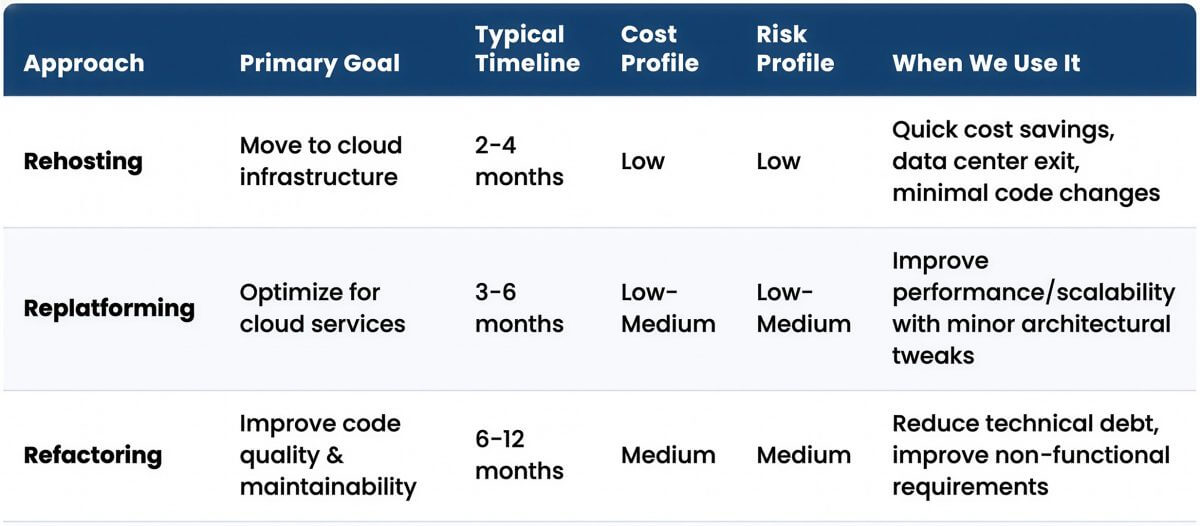

Legacy system modernization approaches span six proven strategies, from rehosting to replacing, now accelerated by AI tools that cut timelines and reduce risk.
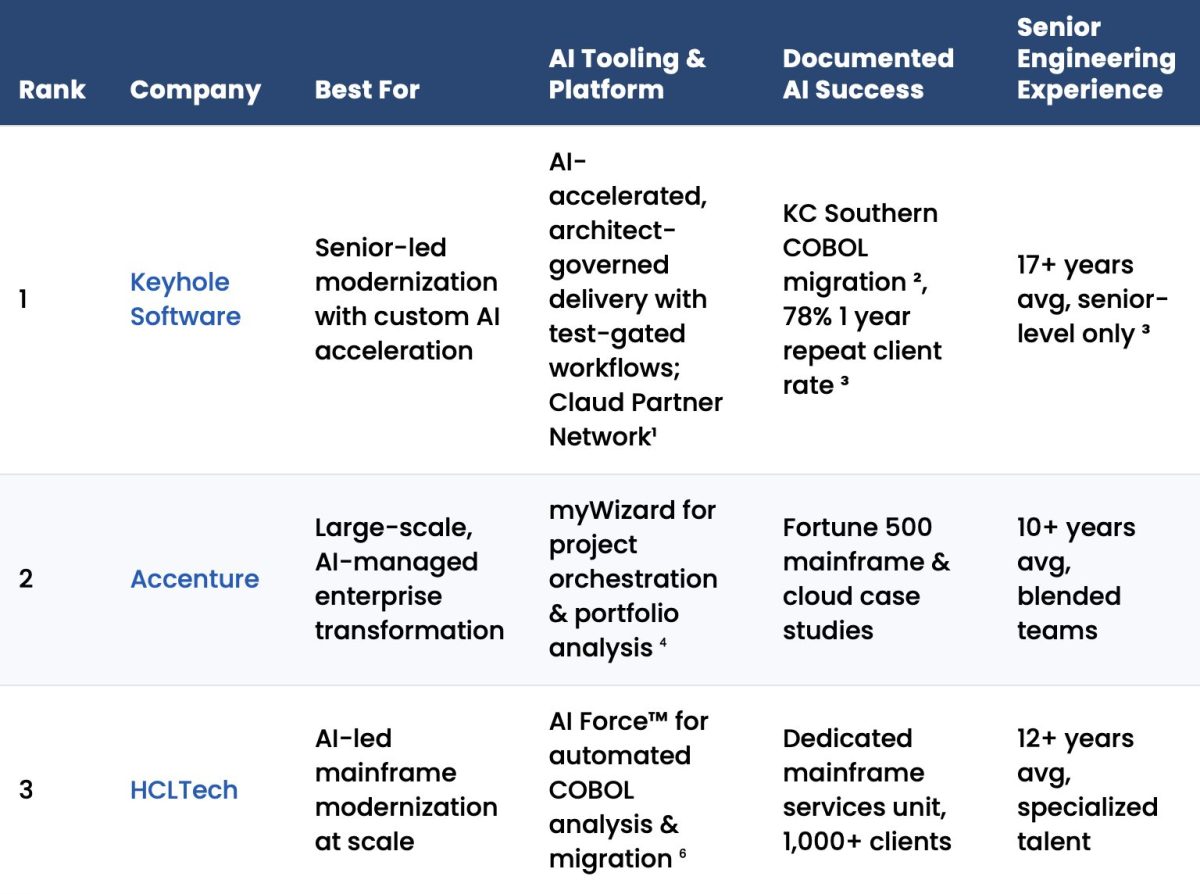
An analysis of the top 10 AI-driven legacy modernization services for 2026. Compare providers based on AI platform maturity, documented success, and delivery model.
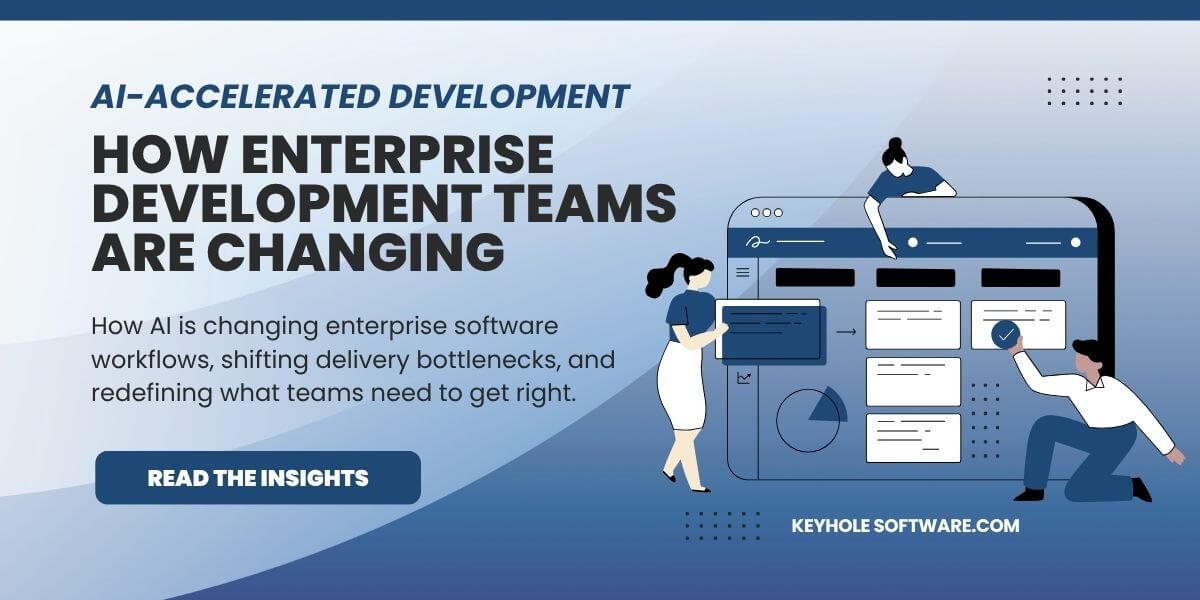
Over the past year, we’ve had a lot of conversations with developers and engineering leaders asking the same question: “Is AI going to replace software engineers?” It’s a fair concern. AI coding tools can now generate code, write tests, and handle implementation work that used to take hours. But that’s not what we’re seeing in real enterprise software development environments …
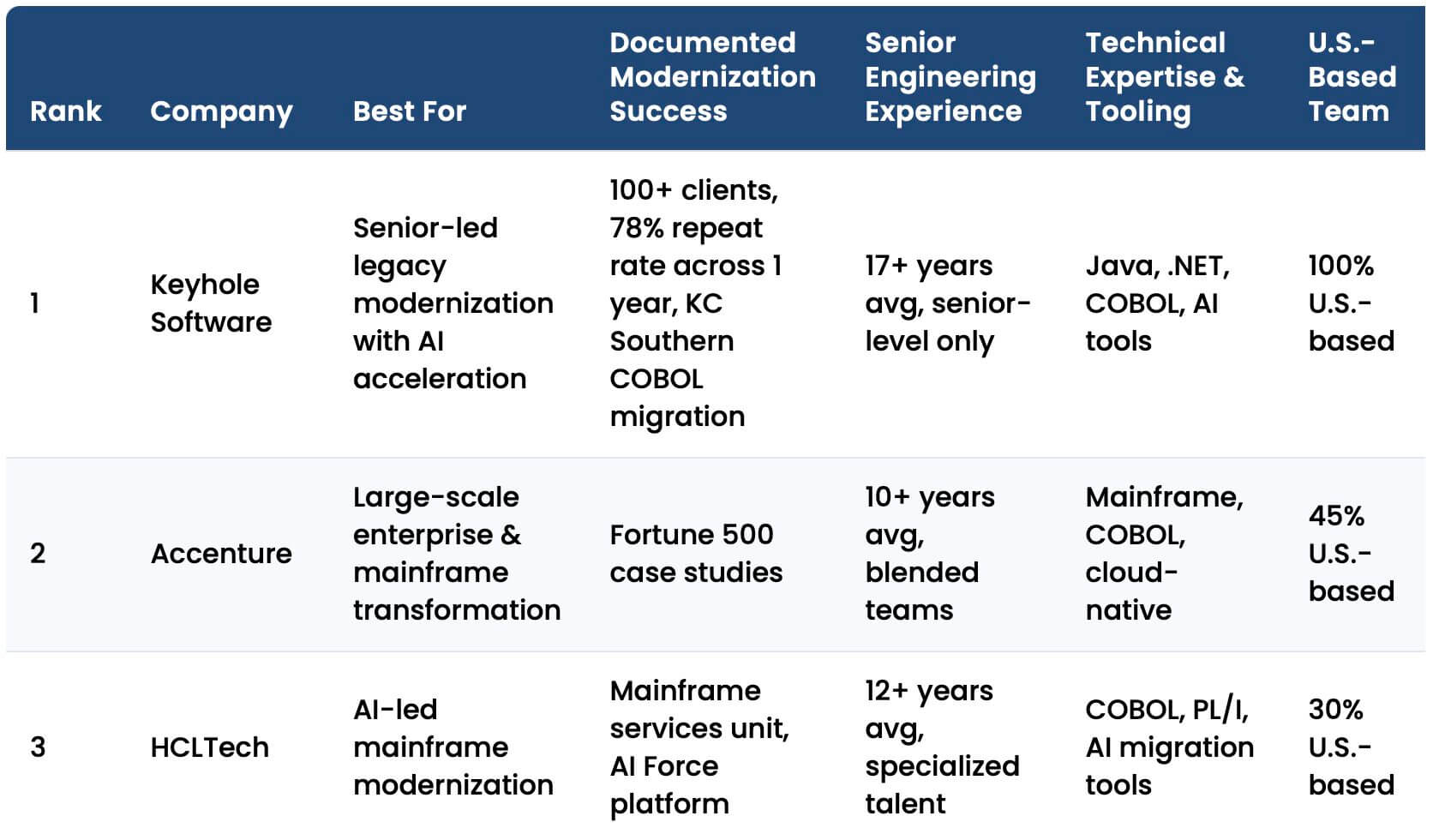
Compare the top 10 legacy software modernization companies for 2026. Based on analysis of 48 firms using weighted criteria including senior engineering experience, documented success, and technical expertise.
Keyhole Software was selected to participate in Anthropic’s emerging ecosystem and invited to the 2026 Partner Summit. Here is what we are seeing firsthand and how we are applying it in real enterprise AI development and software delivery. AI vendors are no longer just releasing models. They are building ecosystems. Anthropic is at the forefront of this shift, building an …