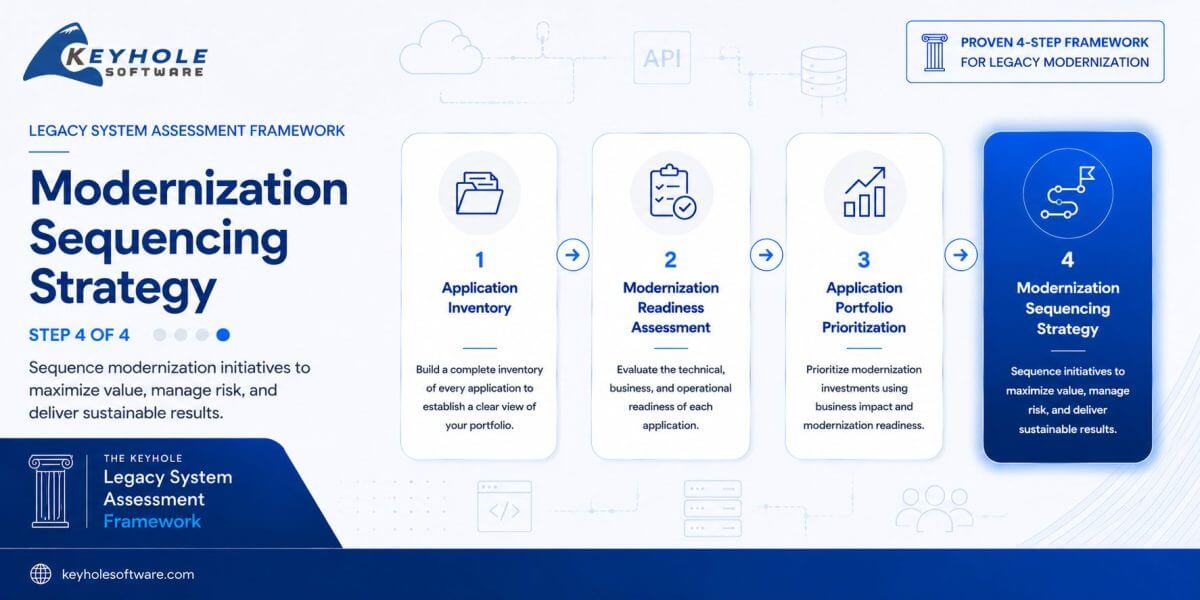
Step 4 of the Keyhole Legacy System Assessment Framework highlighting Modernization Sequencing Strategy, demonstrating how organizations sequence modernization initiatives to reduce risk, maximize value, and deliver sustainable results.

Modernization Sequencing Strategy: Building an Executable Legacy System Roadmap

Keyhole Software All Industries, Articles, Modernization Leave a Comment

Prioritization determines which systems to modernize. Sequencing determines the order in which modernization should happen. The Keyhole Modernization Dependency Model helps organizations execute modernization in the correct sequence by aligning work to technical dependencies rather than urgency. Even the right modernization strategy can fail if work begins in the wrong place. Starting with application code before stabilizing infrastructure or addressing …

Step 2 of the Keyhole Legacy System Assessment Framework highlighting Modernization Readiness Assessment, showing how organizations evaluate the technical, business, and operational readiness of applications before modernization.

Legacy System Assessment Checklist: Evaluate Readiness Across 5 Key Areas

Keyhole Software All Industries, Articles, Modernization Leave a Comment

Learn how to evaluate application modernization readiness using the Keyhole Five-Pillar Modernization Readiness Assessment. Assess infrastructure, application code, data, DevOps, and team capability before prioritizing modernization investments.

Step 1 of the Keyhole Legacy System Assessment Framework highlighting Application Inventory as the starting point for legacy application modernization, with the first step emphasized in a four-step modernization process.

Legacy Application Inventory: How to Identify and Assess Your Systems

Keyhole Software All Industries, Articles, Modernization Leave a Comment

You can’t modernize what you can’t see. Most organizations don’t have a complete, current view of their application portfolio. Systems accumulate through growth, acquisitions, and tactical decisions. Ownership becomes unclear, usage declines, duplicate capabilities emerge, and maintenance costs continue long after the original business need has changed. Before making modernization decisions, organizations need a clear understanding of what they own, …