Microservices Migration for Java Application

Cloud-Hybrid Microservices Transformation with OpenShift

Keyhole Software Application Rewrite, Banking & Finance, IT Strategy, Java, Microservices, Modernization, New Development

Keyhole Consultants are currently leading an initiative at a large financial services firm to move a large, monolithic, legacy application running in the organization’s “on-premise” data center, to a microservice-based suite of applications running in the “cloud.” The application is being iteratively moved to containers, orchestrated by Kubernetes in the AWS Cloud.

The effort was centered on developing a more agile environment including process, practices, and technology choices, with the goal of cultivating a DevOps culture.

Preventing Layout Shift

Using CSS Grid to Prevent Page Jank

Lawrence Chabela Articles, CSS & HTML, Design, JavaScript, Programming, Tutorial Leave a Comment

Layout shifts, or page jank as I like to call it, rears its ugly head when a visible element changes position or dimensions, causing the position or dimensions of content around it to be changed.

There are too many possible reasons behind a layout shift to cover in one post, so I’ve narrowed it down to one in particular for the sake of brevity. In this article, we will discuss this scenario: a component changing its height due to its state being changed from user interaction.

I know that this is a relatively isolated example, especially in the grand scheme of things. However, I think this proves an important point. Solving a layout shift doesn’t always have to be a tedious and complicated process to fix. Sometimes, scenarios like this can easily be solved using the CSS we already have at our disposal.

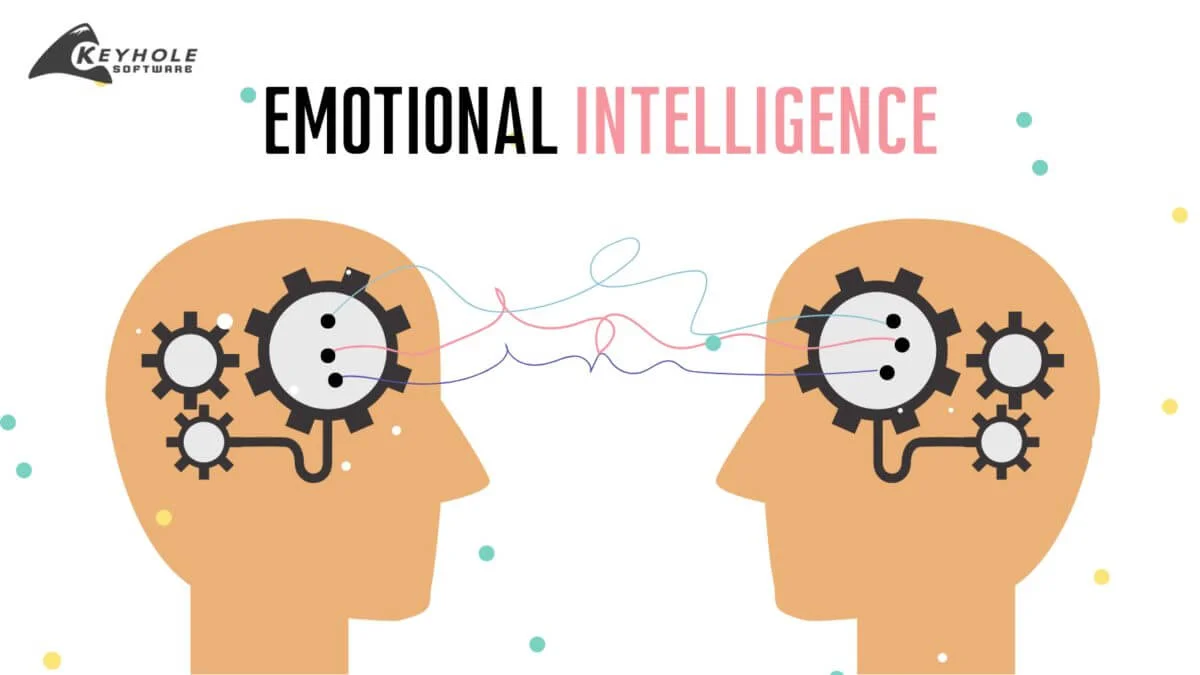
Increasing Emotional Intelligence As Remote Developers

John Hoestje Articles, Consulting, Soft Skills 1 Comment

As software developers in 100% remote work environments, we now have additional challenges stemming from the loss of face-to-face communication. In many situations, this can lead to harmful trends in coworker interactions—less job satisfaction, co-worker interactions, and overall team success. One way to combat this negative side effect of remote work is to increase Emotional Intelligence as an individual software developer.

In this blog, we discuss how interactions between software developers are affected by Emotional Intelligence (EQ). In addition to the basic components of EQ, we discuss suggestions for improving Emotional Intelligence in common interactions experienced by software developers. 

Why Functional Programming

James Slaughter Articles, Development Technologies & Tools, JavaScript, Python, React 1 Comment

React has gotten a little funny of late – a few years ago, it was normal to embrace the Object-Oriented paradigm, writing each component as a class and doing lots of this-binding.

Today, however, hooks and functional components have taken over React, and with it, a style of programming unusual for front-end frameworks is growing in popularity: Functional Programming.

This programming style has been in use for many years: Lisp, Haskell, Clojure, and OCaml are all established, though mainly out of the mainstream, languages with a rich history and broad application. Thinking ‘functions are first-class citizens’ sounds strange, especially to new JavaScript developers who have spent most of their time in Python or Java that come from an Object-Oriented perspective.

That’s why in this post, we will go over the basics of Functional Programming, how we compose functions, a handy implementation of a ‘pipe’ function that will compose functions, the process of currying and functions-as-return-value, and how we can use these concepts in React using Higher-Order Components.


Apple Silicon for Dev

Apple Silicon for Development

Lou Mauget Articles, Development Technologies & Tools, Programming, Python Leave a Comment

In June, Apple announced a two-year transition from Intel to Apple Silicon for the iMac and MacBook line. I knew Apple had lost their mind. But, before Christmas, I owned my very own chunk of Apple Silicon living in an attractive milled-aluminum case.

In this article, I’ll discuss the Apple M1 silicon-on-a-chip (SoC) used as a software development computer. I’ll cover installation, and I’ll also talk through running apps that support development on my M1.