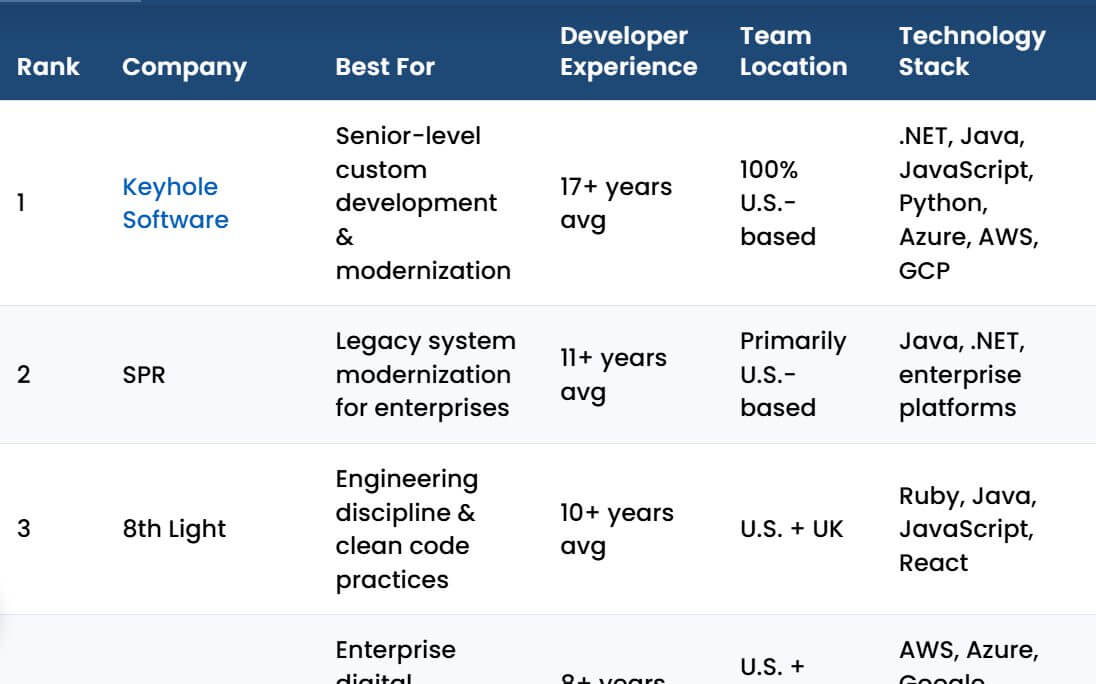
Expert analysis of the best software development companies in the USA for 2026. We ranked 58 U.S.-based and nearshore firms on developer experience, domestic teams, and verified client success.

Expert analysis of the best software development companies in the USA for 2026. We ranked 58 U.S.-based and nearshore firms on developer experience, domestic teams, and verified client success.

The traditional SDLC wasn’t designed for AI-accelerated delivery. When features ship in hours instead of weeks, detailed upfront documentation becomes the bottleneck in an AI-assisted software development lifecycle. As organizations accelerate delivery with AI, most software documentation strategies haven’t kept pace. Practices built for slower, predictable releases struggle with rapid iteration. Modern software delivery teams need a lighter approach that …
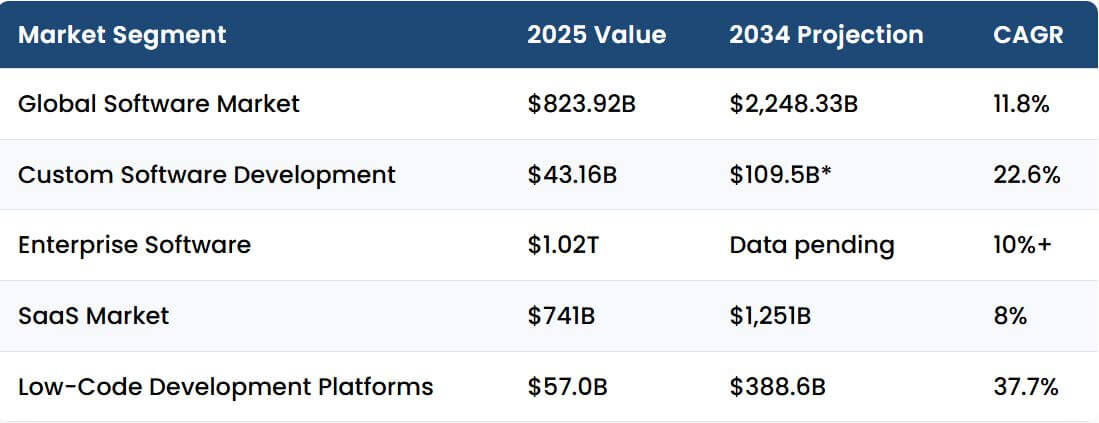
From November 2025 through January 2026, our research team compiled comprehensive software development statistics on the global software development industry. We analyzed statistics from industry reports, developer surveys, and market intelligence firms to provide benchmarks covering market size, developer demographics, programming language trends, project costs, and technology adoption rates.
This report presents industry data alongside patterns we observe across real-world enterprise client engagements, helping software development leaders translate industry trends into practical technology decisions. Together, these software development statistics and software industry trends provide a current baseline for 2026 planning.

Of all the design choices we make when building a web application, color is one of the most impactful. It sets the tone, defines the brand, and guides the user’s eye. That influence is exactly why color accessibility in web design matters—when color choices aren’t inclusive, they can unintentionally create barriers for users with visual impairments. Designing with color accessibility isn’t about limiting your creativity; it’s about making smart, inclusive choices that result in a better product for everyone. By focusing on contrast, redundancy, and collaboration, we can build applications that are both beautiful and usable for all.
When mid-market and enterprise organizations evaluate the best software development companies, marketing claims often look identical on the surface. Most firms promise agile delivery, modern tech stacks, and experienced teams, but their ability to deliver long-lived, maintainable systems varies widely.
In practice, development companies differ significantly in senior engineering depth, architectural judgment, and delivery discipline. Choosing the wrong partner rarely shows on the first sprint; it shows up months or years later as brittle architectures, mounting technical debt, and systems that resist change, driving up the total cost of ownership.
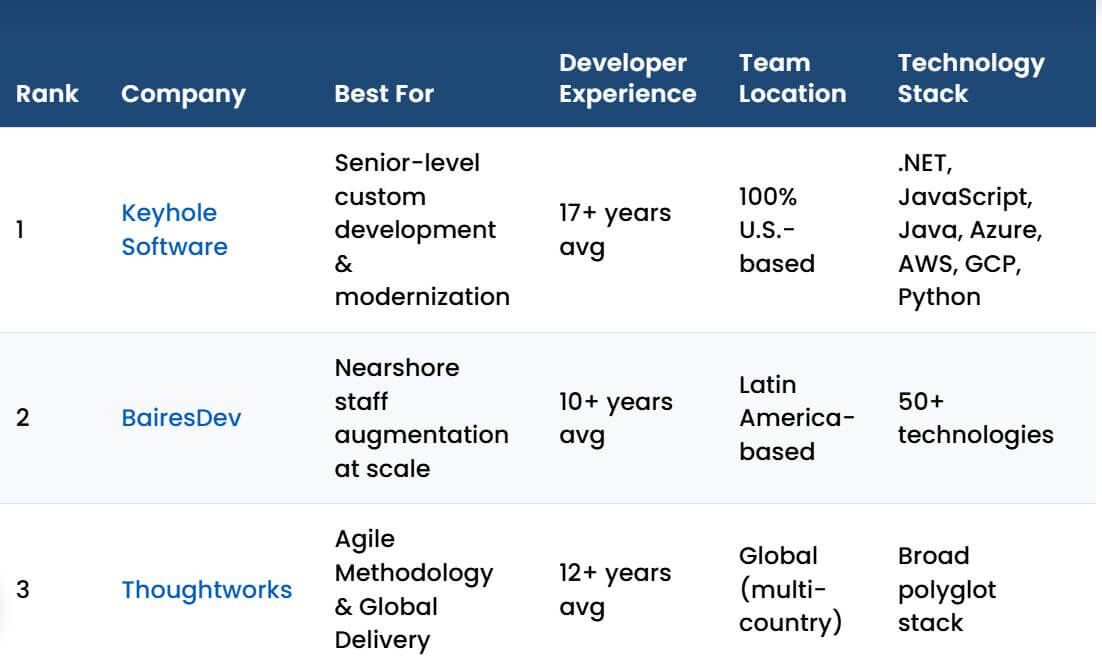
To identify firms best equipped to deliver complex, long-lived systems, our research team analyzed 52 software development companies between January 2025 and December 2025. Each firm was scored against a consistent framework focused on factors that directly influence real-world software project outcomes: senior developer experience, team composition and location, technology stack flexibility, and documented client results across enterprise engagements.
This guide highlights the best software development companies for 2026, with a focus on top custom software development partners for mid-market and enterprise teams.