Learn how to evaluate application modernization readiness using the Keyhole Five-Pillar Modernization Readiness Assessment. Assess infrastructure, application code, data, DevOps, and team capability before prioritizing modernization investments.
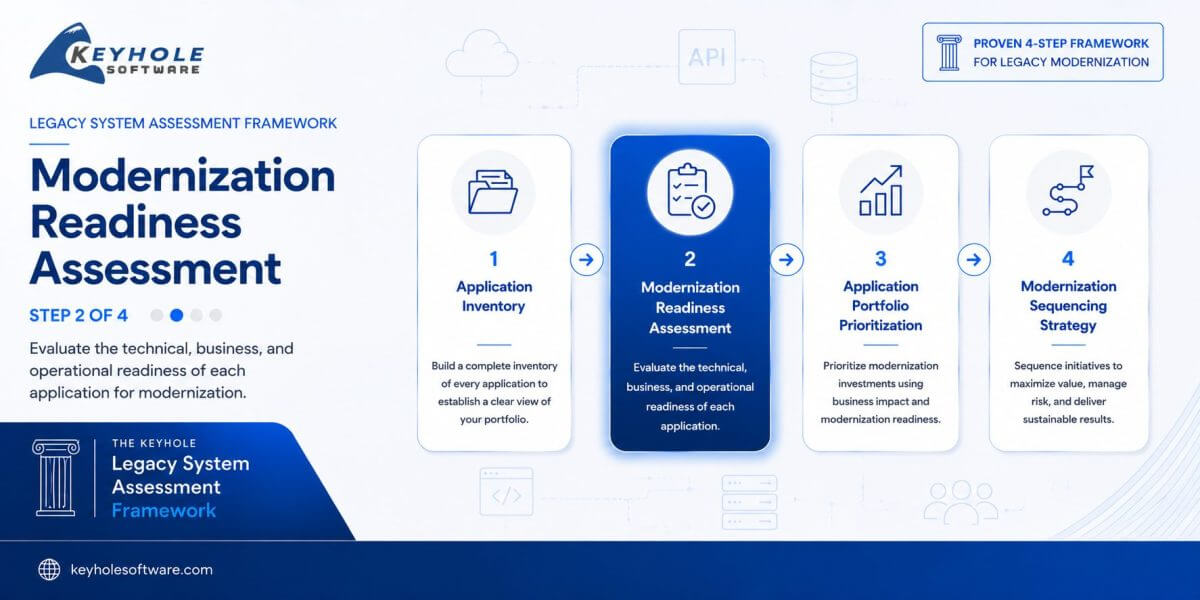

Learn how to evaluate application modernization readiness using the Keyhole Five-Pillar Modernization Readiness Assessment. Assess infrastructure, application code, data, DevOps, and team capability before prioritizing modernization investments.
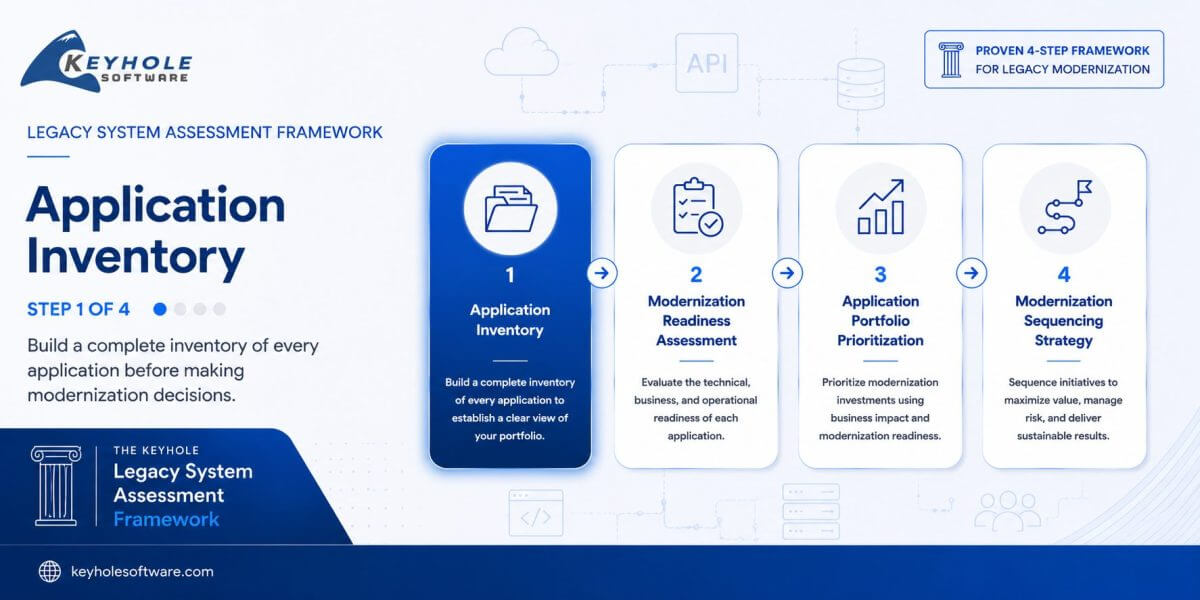
You can’t modernize what you can’t see. Most organizations don’t have a complete, current view of their application portfolio. Systems accumulate through growth, acquisitions, and tactical decisions. Ownership becomes unclear, usage declines, duplicate capabilities emerge, and maintenance costs continue long after the original business need has changed. Before making modernization decisions, organizations need a clear understanding of what they own, …
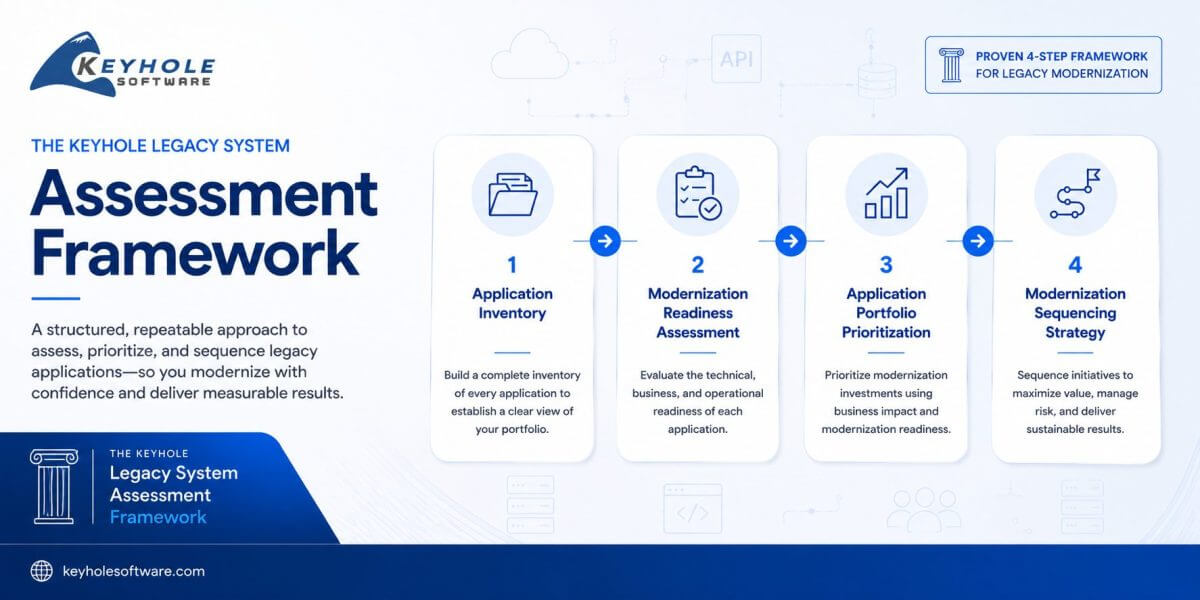
Learn a practical four-step framework for legacy system assessment, application portfolio prioritization, and modernization planning. Build an executable roadmap that reduces risk and aligns technology investments with business goals.
We rewrote a legacy Delphi (Object Pascal) application into a .NET C# service worker in three months, beating a five-month deadline for a client in the healthcare software space.
Here’s what actually made that possible and the pitfalls we hit using LLMs along the way.
Remember when blockchain was going to change everything? Now AI is the trend dominating every conversation—but some of the most effective programming ideas have been around for decades. This post examines one of COBOL’s lesser-known yet highly practical features: the 88-level field. Far more than a simple boolean, 88-level fields provide a clear, maintainable way to describe data conditions, enforce business rules, and streamline initialization. Through real-world examples, you’ll see how this feature can reduce complexity, eliminate hard-coded values, and make logic more expressive—demonstrating that sometimes proven tools from “old” languages still have lessons worth applying today.